
Pre-Shipment Inspection in China: Find Problems Before Your Customers Do.
We inspect selected finished goods before shipment, record observable defects and measurements, and—when included in the agreed scope—review correction evidence or reinspect affected points. You receive documented findings before deciding whether the order should be released.
Evidence before you approve, correct, or release the shipment.
Recorded
Action
or Reinspection
Decision
One Good Sample Doesn’t Guarantee a Good Shipment.
An approved sample shows what one supplier produced once. A pre-shipment inspection checks whether selected finished goods from the production batch match the agreed references and requirements.
Approved Sample
Material
Color
Dimensions
Function
Sample Approval
≠ Shipment Approval
Bulk Production
Batch Variation
Workmanship
Packaging
Inspection helps make differences between the approved reference and sampled finished goods visible before release.
Every Inspection Starts With Your Agreed Requirements.
We compare sampled finished goods against the references you approved—the sample, specifications, purchase order, and packaging instructions—not against an undefined factory standard.
YOUR AGREED REQUIREMENTS
Approved Sample
Physical quality reference
Product Specifications
Materials, colors and dimensions
Purchase Order
Quantity and customization details
Packaging Instructions
Labels, barcodes and carton marks
OUR INSPECTION CHECKLIST
Quantity & Assortment
Counts, cartons, colors and size breakdowns.
Appearance & Workmanship
Scratches, stains, loose parts and finishing.
Dimensions & Material Details
Measurements, weight, color, and observable material characteristics.
Function & Basic Performance
Operation, assembly, compatibility, and agreed basic functional checks.
Logo & Customization
Printing, position, spelling and custom details.
Packaging & Labeling
Packaging, manuals, barcodes and carton marks.
Checks are limited to sampled units and observable criteria. Laboratory testing, certification testing, and destructive testing are separate scopes when required.
A Documented Process From Inspection Request to Buyer Decision.
Once the inspection scope, reference standards, production readiness, location, and timing are confirmed, we inspect at the agreed location, select units from the finished goods, check them against the agreed requirements, document the findings, and issue the report before you decide whether the order should move forward.
Confirm Scope & Readiness
Confirm the product, approved references, inspection location, production status, and inspection date.
Confirm Available Quantity & Select Samples
Review the available finished quantity and select units from different cartons according to the agreed sampling approach.
Inspect Against Requirements
Check the selected units against the approved sample, specifications, purchase order, and packaging instructions.
Document Findings & Evidence
Record nonconformities, sample results, measurements, photos, and videos as inspection evidence.
Issue the Inspection Report
Send the findings before shipment so you can approve, request corrective action, or arrange reinspection.
Finding a Defect Is Only the First Step.
When requested, we can share the documented findings with the supplier, follow up the agreed corrective action, and review correction evidence or arrange a reinspection—so your release decision is based on recorded results rather than verbal promises.
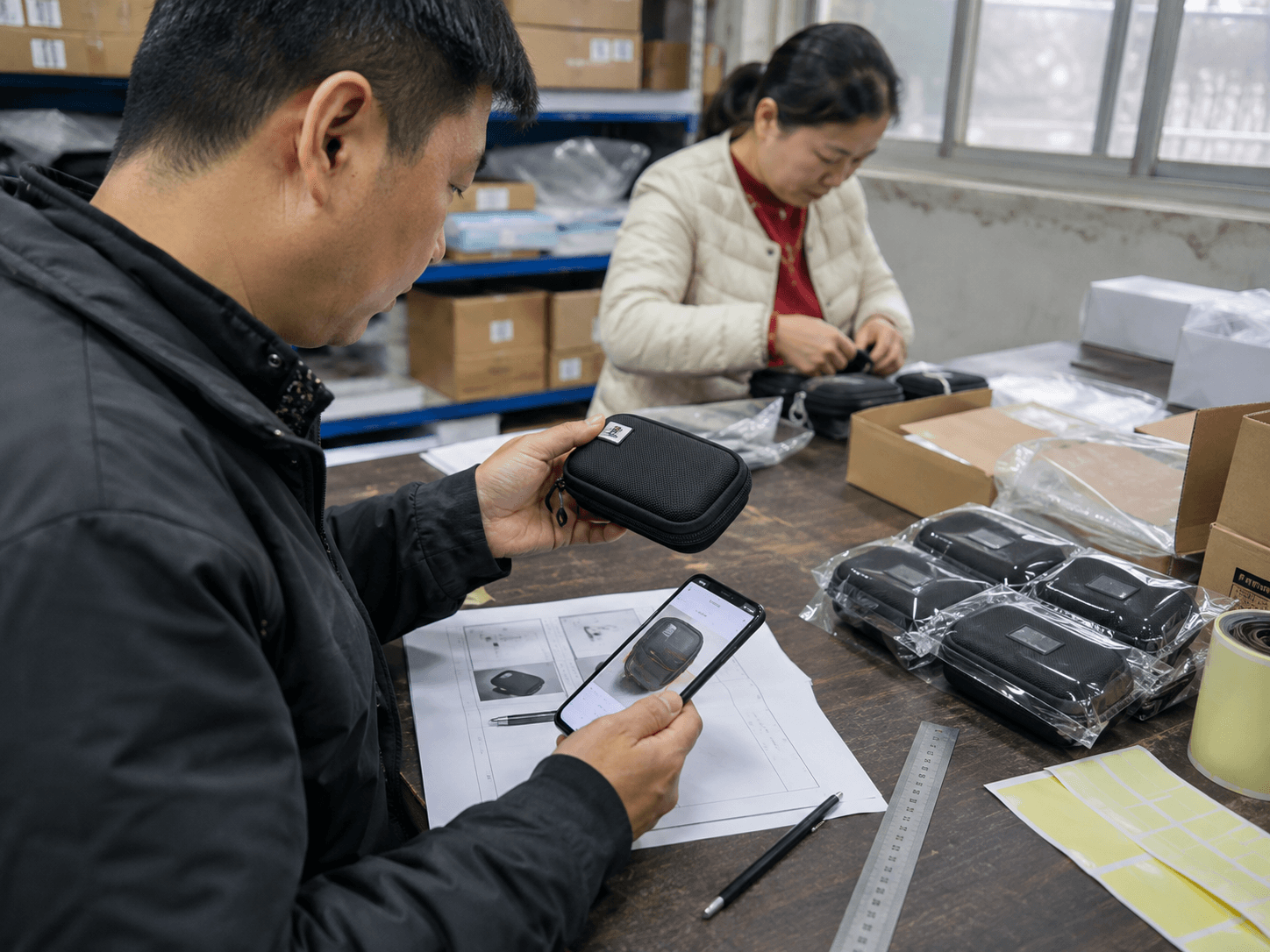
Document the Issue
Record the defect, affected samples, observed quantity, measurements, photos, and videos.
Follow Up the Agreed Corrective Action
Record what the supplier agrees to rework, replace, repack, or correct—and when the action is expected to be completed.
Review Correction Evidence or Reinspect
Review the available correction evidence or, when arranged, reinspect the affected points before the buyer decides whether to release the shipment.
Clear Evidence Before You Decide to Ship.
You receive an organized record of what was checked, what was found in the sampled units, the supporting photos and measurements, and how any open issue was communicated or followed up before shipment.
Inspection Summary
Agreed scope, sampled units, recorded findings, and overall inspection result.
Defect & Measurement Evidence
Close-up photos, observed quantities within the sample, measurements, and affected locations.
Communication & Follow-Up Record
Recorded updates showing how findings, open points, and buyer decisions were communicated.
Correction & Reinspection Status
Supplier response, correction evidence, remaining open points, and reinspection results when separately arranged.
You receive the evidence. You keep control of the shipping decision.
Plan the Inspection Before You Approve the Shipment.
Tell us where the goods are, when production is expected to be ready, and which requirements matter most. We will confirm the inspection scope, timing, sampling approach, and evidence requirements before arranging the visit.
We’ll review the information and confirm the practical inspection scope before scheduling.
What Buyers Usually Ask Before an Inspection.
The inspection should normally be arranged when the agreed production quantity is sufficiently complete and the goods are available for sampling. The exact timing depends on the product, packing status, inspection scope, and planned shipment date.
Not unless a 100% inspection is separately agreed. Standard inspections check selected units according to the agreed sampling approach. Because the inspection is based on sampled units, it helps reduce uncertainty but cannot guarantee that every unit is defect-free.
If the available finished quantity or packing status does not match the confirmed inspection conditions, the inspection may be limited, postponed, or rescheduled. We document the situation and confirm the practical next step with the buyer.
Yes. Correction evidence can be reviewed, or a reinspection can be separately arranged to check the affected points. The appropriate approach depends on the type and extent of the original findings.
The inspection scope is confirmed after reviewing the product, number of SKUs, quantity, inspection location, checklist, timing, sampling requirements, and any special testing or evidence needs.